
In what is seen as the first sign of China's exasperation over Russia's Ukraine war, Chinese President Xi Jinping on Thursday raised 'questions and concerns' over the conflict in his meeting in Samarkand with Russian President Vladimir Putin who thanked Beijing for its 'balanced position' on the crisis.
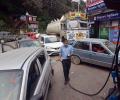
India's appetite for imported crude oil may wane in fiscal year (FY) 2023 from record levels in pre-pandemic 2019-20 fiscal as higher oil prices, a spillover from the conflict in Ukraine, and increasing use of biofuels affect domestic demand for petroleum products. Brent crude surged to a nine-year high, shy of a July 2008 record $147.50 a barrel, before declining to around $100 a barrel - but the volatility in commodity rates will slow global economic growth and use of fuels. Demand for all oil products may grow at only 2-3 per cent in FY23, slower than the current fiscal and nearly half the 5.5 per cent growth estimated by the petroleum ministry, according to industry officials.

Prime Minister Narendra Modi on Wednesday launched a Rs 100 lakh crore national master plan for multi-modal connectivity that aims to develop infrastructure to reduce logistic costs and boost the economy. PM Gati Shakti targets to cut logistic costs, increase cargo handling capacity and reduce the turnaround time, Modi said at a function to launch the plan. The plan aims to lend more power and speed to projects by connecting all concerned departments on one platform, he said, adding the infrastructure schemes of various ministries and state governments will be designed and executed with a common vision.
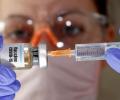
A model being considered is to have a combined cold chain approach - where the agricultural cold chain would be combined with vaccine cold chains.

Department of Economic Affairs secretary Atanu Chakraborty said that equity capital flows have been positive this year.

According to the proposal, the MHA is working on a new 'model' where the burden of internal security duties, including conduct of elections, will be largely borne by the country's largest paramilitary force, the CRPF.
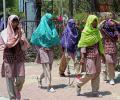
The global body added that national meteorological and hydrological departments in both countries are working closely with health and disaster management agencies to roll out heat health action plans.
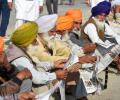
In their letter, the lawmakers said that the US as a nation that is familiar with political protests can offer counsel to India during their current period of social disturbance.

Monsoon revival over weekend likely, but second-half rainfall may be muted. If the rains become scarce after mid-August, the standing kharif crops might be impacted

The Centre on Wednesday announced a raft of post-retirement employment possibilities for 'Agniveer' like priority in recruitment to the central armed police forces (CAPF) and Assam rifles but that failed to assuage the concerns of the opposition Congress which warned the 'transformative' 'Agnipath' scheme will reduce the operational effectiveness of the armed forces.

What some of us think are strong, bold and firm decisions are cruel, harsh and unwanted for others. This is what we need to consider when we look at what has happened with the farm laws, asserts Aakar Patel.

Agriculture, social services, education, defence and so on will be brought into the digital fold and every gram panchayat will be connected to the internet.
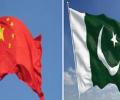
China on Thursday told Pakistan's new Prime Minister Shehbaz Sharif that it will always put its "all-weather ally" as a priority in its neighbourhood diplomacy as it praised his commitment to promote the USD 60 billion CPEC initiative.

Nitish Kumar has to make an existential choice: Between governance and politics, argues Aditi Phadnis.
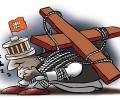
'Poor home work, and a subsequent loss of nerve.' 'This sums up the Modi government's current travails, the stall in key sectors, fading momentum, irritability,' points out Shekhar Gupta.

In the past, India strongly rejected references made to Jammu and Kashmir in a previous joint statement by Pakistan and China.
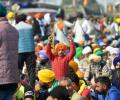
Voicing his support for the farmers' protest in India, the Speaker of Wisconsin State Assembly has urged the Indian government to reconsider its decision on the three farm laws and listen to the concerns of the affected farmers.

Congress general secretary and chief spokesperson Randeep Surjewala accused the BJP of pushing India into a dark age of religious polarisation to "subserve its parochial political agenda in the short term".

The unions said the minimum support price (MSP) cannot be separated from the demand of repealing the contentious agriculture laws, asserting that the issue of a legal guarantee for the MSP is a key part of their agitation.
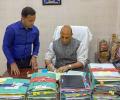
With half of their staff on duty and no visitors allowed in waiting halls, many top leaders of Bharatiya Janata Party (BJP) who are under quarantine due to the extended lockdown are exploring ways to keep themselves busy.

Aiming to push India into the list of the top 10 agri export nations, the policy has been backed by the Prime Minister's Office

The move to resume work in ministries comes nearly a month after the government issued work from home protocols in its fight against the coronavirus pandemic.

Use cases for drones are, however, immense - industrial inspections, geospatial surveys, agricultural surveys, and general surveillance and security.
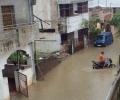
Puducherry has been battered by heavy rains since the beginning of November and officials have assessed that such a quantum of downpour had not been seen in the last 100 years.

Before repeal of Article 370 and Article 35-A in August last year, non-residents could not buy any immovable property in Jammu and Kashmir. However, the fresh changes have paved the way for non-residents to buy land in the union territory.

The presence of the private sector at a prestigious military training institution is an important acknowledgement of its growing capabilities in designing and manufacturing cutting edge aerospace and defence equipment, reports Ajai Shukla.
The joint secretary also said a high-level task force to work on frontiers of science related to vaccines and drug testing was formed on Sunday.

Given the many policy areas where the Centre and the states have not been seeing eye to eye in the last few years, it is time the Modi government convenes a meeting of the Inter-State Council, recommends A K Bhattacharya.

More than five questions and supplementaries, mostly related to agriculture and horticulture, were taken up before the proceedings were first adjourned till noon. The Question Hour went on for nearly 40 minutes.

The GoM will suggest various development, economic and social steps to be taken for the two UTs which will come into existence on October 31, sources said.
Among the major ones are fewer restrictions on market access for US medical device manufacturers, as well as access for other key products.

A flower has been named in honour the Indian prime minister.

There was an environment of "indifference" towards the use of technology in governance before 2014 due to which the poor and the middle class suffered the most, Prime Minister Narendra Modi said on Friday. He asserted the current government has ensured last-mile delivery of services with the help of technology, including drones. Addressing a gathering after inaugurating India's biggest drone festival in Delhi, he said, "At a time when we are celebrating Azadi ka Amrit Mahotsav, it is my dream that everyone in India should have a smartphone in his or her hand, every farm should have a drone and every house should have prosperity." The enthusiasm being seen in India about drone technology is amazing and indicates possibilities of an emerging sector of employment generation, the prime minister said.

The NCEAR has indicated some improvement in the fourth quarter of the current financial year.
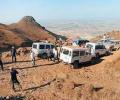
The Union ministry of agriculture and the department of land resources under the ministry of rural development have given "in principle approval" to a proposal of the Department of Industrial Policy and Promotion (DIPP) to invite FDI for developing non-arable land through better technology into fertile and cultivable land.
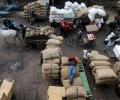
The Indian economy remains on track to regain its position as the world's fastest-growing major economy after official estimates on Friday put the expansion at a tempered 9.2 per cent this fiscal amid concerns over the impact of a resurgent virus on the fragile recovery. The growth in the gross domestic product (GDP) of 9.2 per cent in April 2021 to March 2022 fiscal (FY 2021-22) given by the National Statistical Office (NSO) in its first advance estimate compares with 9.5 per cent expansion forecast by the Reserve Bank of India (RBI) last month. The economy had contracted by 7.3 per cent in the previous financial year.

Ramesh opposes Pawar's plan to provide cheap labour to farmers under NREGS.
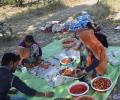
'To bring about a paradigm shift in farmers's income, we need to change our approach to agriculture, and transit from the narrow prism of cultivation to a full-fledged enterprise, by building all associated supply chain linkages.' 'This alone will make the farmer an entrepreneur in his own right.'

The exercise, Agriculture Minister Radha Mohan Singh said, will help ease any possible impact of sub-par rainfall on farmers.

Government's claim of a "considerable" drop in farmers' suicides in the country did not impress the Supreme Court which on Friday said there should be no such cases at all.
